Equipment we install and service
Mitsubishi Electric equipment in Bellingham
The Mitsubishi Electric lines we install here, how they behave at a 19°F design temperature, and where we would spec something else.
- WA L&I #BELLIHC808NM Active registration — verify it with the state
- $30,000 bonded Surety bond on file with L&I
- $1,000,000 insured General liability coverage
- Local since 2020 Owner-operated in Whatcom County
- We pull the permit City of Bellingham or Whatcom County, and we meet the inspector
Mitsubishi Electric lines we work on
- M-Series single-zone ductless systems
- Hyper-Heating INVERTER (H2i) and H2i plus outdoor units
- MXZ multi-zone outdoor units
- SVZ air handlers and SEZ concealed ducted indoor units
- P-Series light commercial equipment
We install and service this equipment. We do not claim a Mitsubishi Electric dealer tier, badge or award, and nothing here is a manufacturer endorsement of us. Warranty terms and registration windows change without notice, so we confirm the current terms for the exact model you are quoted, in writing.
Mitsubishi Electric against Bellingham's 19°F design temperature
Mitsubishi Electric publishes H2i operation down to -13°F with up to 100% heating capacity at 5°F, and the newer H2i plus equipment is rated at 100% capacity at 5°F, 80% at -13°F, with a heating thermal lockout at -24°F. Against Bellingham’s 19°F design temperature that is headroom you will never spend; it starts earning its price up the valley, where Glacier’s design temperature is 13°F and the foothills run colder and snowier than the bay. For the ducted PSE upgrade rebate you must still produce AHRI figures showing COP of at least 1.75 at 5°F and at least 70% of 47°F capacity at 5°F for your pairing. A reputation for cold-weather performance is not something PSE accepts on the form.
For reference, Washington's energy code puts Bellingham's outdoor heating design temperature at 19°F against 24°F at Sea-Tac, in climate zone 4C (marine). We size from a load calculation against that number and check capacity at 5°F, because that is the figure that decides whether backup heat runs all winter.
Specs and coverage
- Efficiency, as published
- Ratings here are pairing-specific rather than brand-wide. A ducted H2i combination such as an SUZ-AA outdoor unit with an SVZ-AP air handler is rated 16.2 SEER2, while wall-mounted single-zone systems rate considerably higher. We quote the AHRI certificate for the pairing on your job instead of the brochure ceiling, because the ceiling belongs to a pairing you are probably not buying.
- Manufacturer warranty structure
- Base coverage with no registration is 5-year parts and 7-year compressor. Register a single-family owner-occupied installation within 90 days and M-Series coverage becomes 10-year parts and 10-year compressor. The 12-year term is reserved for systems installed by a Mitsubishi Diamond Contractor, a program membership we do not hold and will not imply, so plan on the 10-year term with us and price the quotes accordingly. None of these tiers include labor.
Published manufacturer figures, checked against product and warranty documentation. Ratings belong to a specific outdoor and indoor pairing, so ask for the certificate covering the pairing on your quote rather than the top of the range.
Our take
Where Mitsubishi Electric earns its price, and where it does not
This is the equipment to buy when the building is genuinely hard: a mountain cabin, a leaky 1920s four-square, or a multi-zone layout with long linesets and awkward head placement. The low-temperature engineering is the best documented in the industry, the controls are the best to live with, and the heat pump carries the load instead of handing off to strip heat every January. The counterpoint is money: on a tight, well-insulated house at 19°F you are paying a premium for capacity below zero that Bellingham weather will not request. The headline 12-year warranty is also gated behind a contractor program, so compare the ten-year reality against a Daikin or Fujitsu bid.
Work we do with Mitsubishi Electric equipment
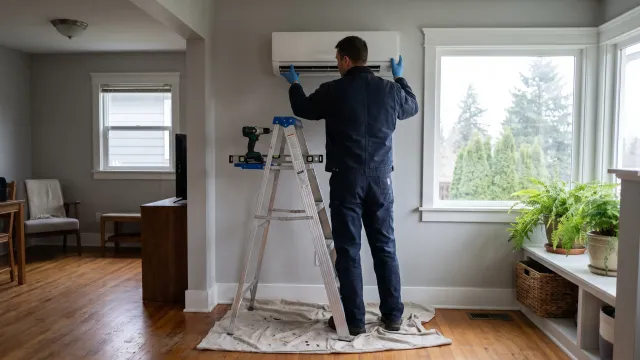
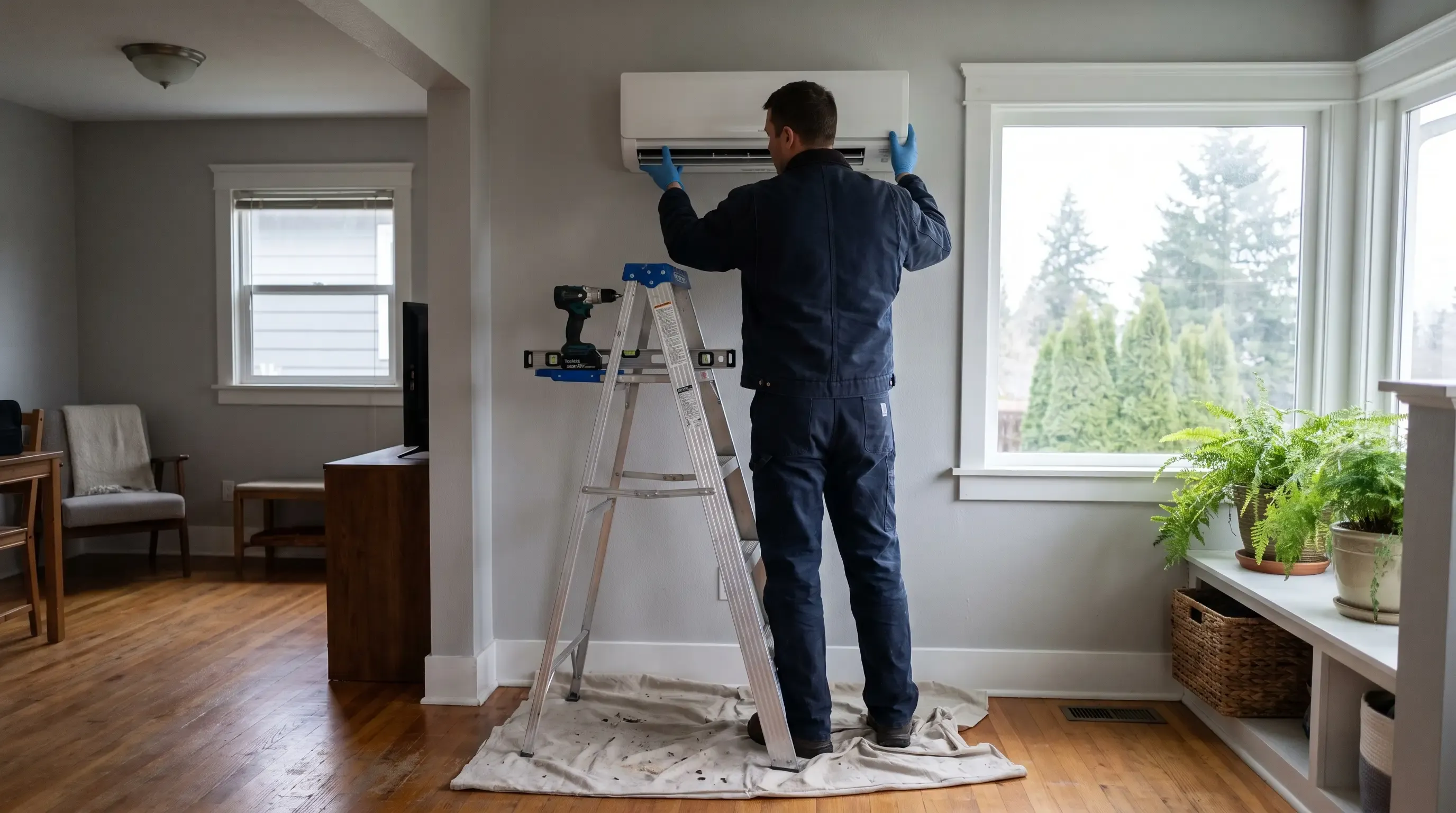
Ductless Mini Split Installation
Heat and cool the rooms you actually use, without tearing your house apart to add ductwork.
$3,000–$ 10,000 Details →
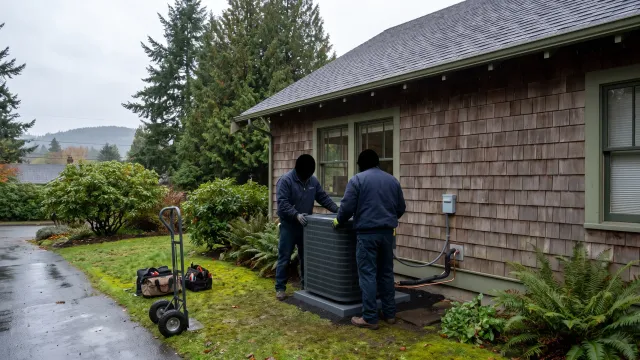
Heat Pump Installation
One system that heats through a Bellingham winter and cools through a smoke-season August, sized to your house rather than to a chart.
$4,000–$ 8,000 Details →
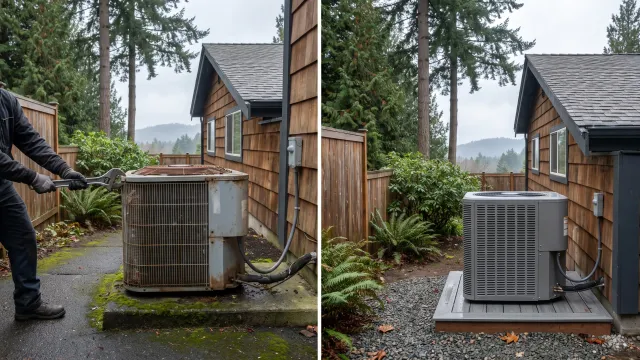
Heat Pump Replacement
Replace a tired system once, correctly, instead of paying for a third repair on equipment that will not see another winter.
$2,793–$ 10,058 Details →
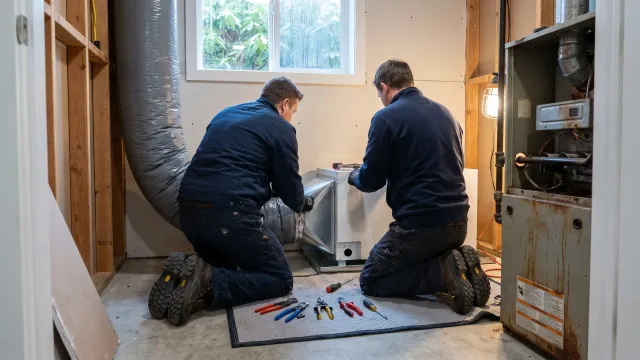
Furnace to Heat Pump Conversion
Use the ductwork you already have to get efficient heating plus air conditioning, and keep the furnace only if it is genuinely earning its place.
$4,000–$ 8,000 Details →
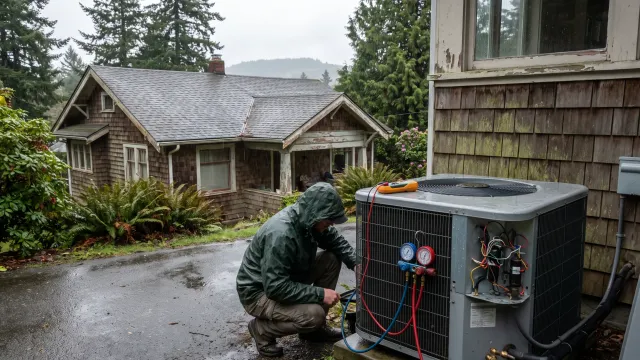
Heat Pump Repair
Find out what is actually wrong, in plain language, with the repair price and the replacement price side by side.
Details →
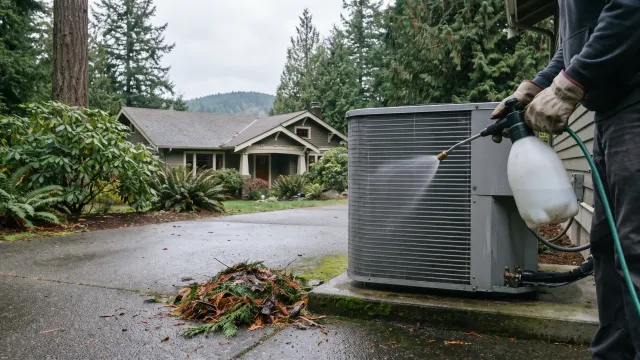
Heat Pump Maintenance
An hour of attention each year keeps the capacity you paid for and finds the cheap failures before they become the expensive ones.
Details →
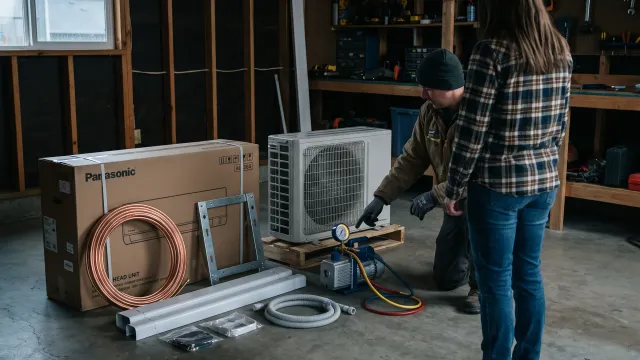
DIY Mini Split Kit Commissioning
Do the labour you are capable of doing, and pay a professional only for the part that needs gauges, a vacuum pump and a licence.
Details →
Get a Mitsubishi Electric quote with the model numbers on it
Tell us the house and what it heats with today. You get the specific model, the published rating for that pairing, and the warranty statement that goes with it.
Ready for a straight answer on your house?
Tell us what you have now and what you want it to do. We will tell you what fits, what it costs, and which rebates you actually qualify for — before anyone comes out.
Monday–Friday, 8:00 AM – 5:30 PM · Emergency calls answered 24/7