
Bellingham & Whatcom County
Whole-Home Water Filtration and Well Water Treatment in Whatcom County
Treatment for the whole house sized off your own lab numbers, so you are solving the problem your water actually has.
- WA L&I #BELLIHC808NM Active registration — verify it with the state
- $30,000 bonded Surety bond on file with L&I
- $1,000,000 insured General liability coverage
- Local since 2020 Owner-operated in Whatcom County
- We pull the permit City of Bellingham or Whatcom County, and we meet the inspector
What people call us about
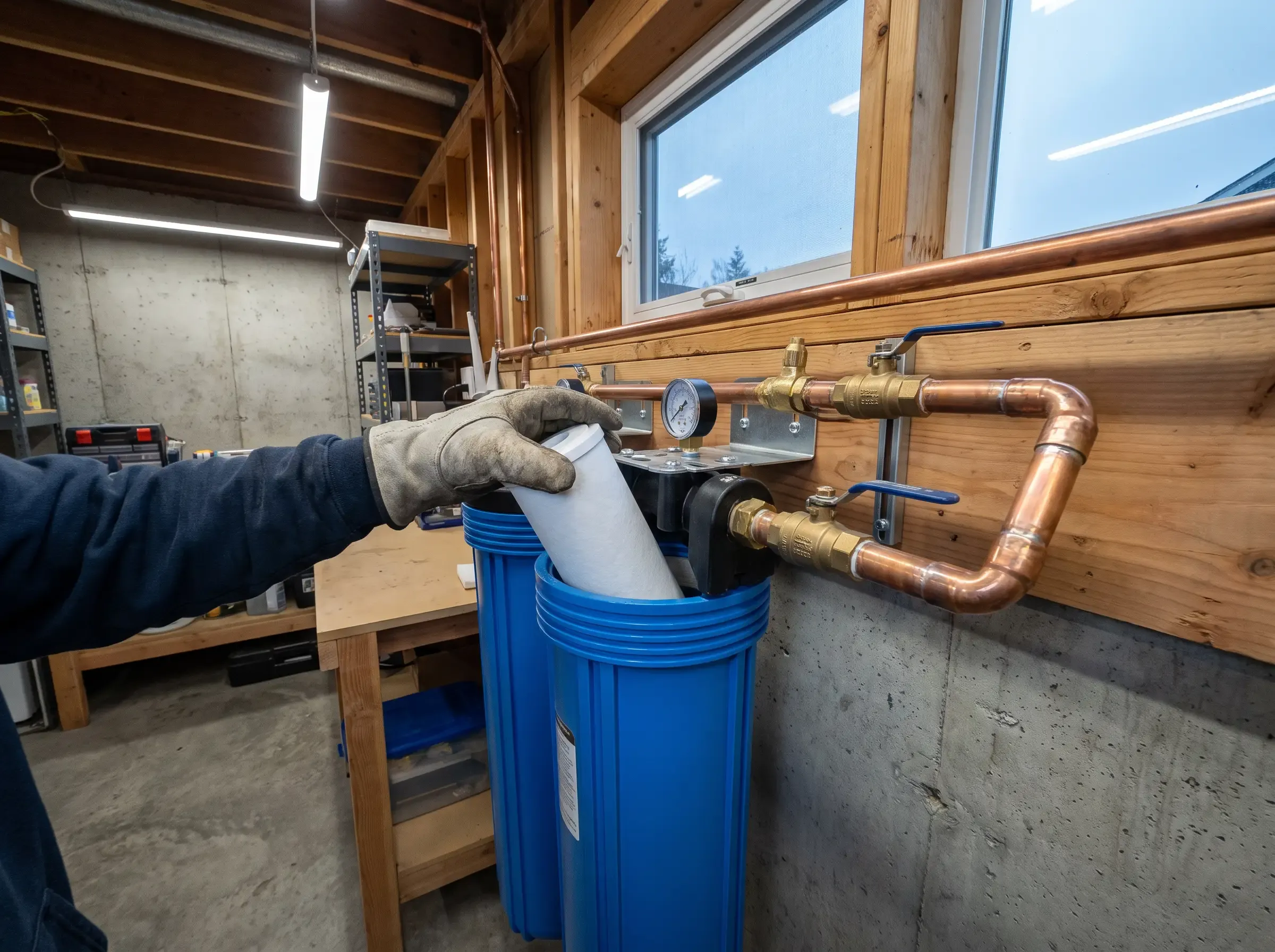
Rust rings in the toilet tank, black flecks in the ice, scale chewing through a two-year-old water heater, or a coliform hit on your annual well test. On a private well the water is entirely yours to manage, because nothing treats it between the aquifer and your pressure tank. Inside Bellingham the City treats Lake Whatcom water to a published standard, so there the conversation is about chlorine and sediment rather than contamination, and knowing which house you live in is the whole job.
This is your job if
- A well-water home where iron and manganese are staining fixtures and laundry.
- Hardness scaling up a tankless unit or a new water heater faster than it should.
- A lab report showing nitrate, which comes from upstream agriculture and passes straight through sediment cartridges.
- A coliform result, which is a disinfection problem rather than a filtration problem and needs to be handled as one.
- A City of Bellingham house where you want chlorine and sediment handled at the main rather than tap by tap.
What whole-home water filtration costs in Bellingham
installed, whole-house reverse osmosis; cartridge, carbon, iron-removal and softening systems sit well below this and are quoted off your lab report
- Simple job
- $4,800
- Complex job
- $8,000
Installed price before rebates. The federal §25C tax credit contributes $0 in 2026 — it terminated for anything placed in service after December 31, 2025.
Range benchmarked 2026-09-04 against published local pricing. Your quote is fixed before work starts — no hourly surprises.
How long it takes: A single point-of-entry filter or softener at an accessible main is usually a day. A multi-stage well treatment train with a new drain and a UV stage runs to two days.
How the job actually goes
-
Start from a lab report
Nothing gets specified before we see numbers from a Washington state-accredited drinking water lab: coliform bacteria, nitrate, iron, manganese, hardness, pH and total dissolved solids at minimum. Iron and manganese are treated differently from each other, pH changes what media will work, and hardness sets the softener sizing. Guessing produces expensive equipment that does not fix the complaint.
Your part: Sample the well yourself following the lab’s instructions and send it in. If you bought the house recently, ask whether a test was done at sale and dig out the report.
-
Match technology to contaminant
Sediment and chlorine come off with cartridge or backwashing carbon. Iron and manganese generally need oxidation and a backwashing media filter, and the right media depends on pH. Hardness is ion exchange. Bacteria means disinfection, most commonly ultraviolet, and no cartridge filter substitutes for it. Nitrate is the awkward one: it passes straight through most filters and needs reverse osmosis or anion exchange, which is why nitrate homes often get whole-house treatment plus a dedicated drinking tap.
-
Size it to the house, not the box
Whole-house equipment has to pass your peak flow without dropping pressure at the shower, and backwashing filters need enough well yield and drain capacity to regenerate. On a marginal well that constrains the design, and we would rather find that at the design stage than after the softener starves the upstairs bathroom. We also look at where the pressure tank and main shut-off are, because that is where the equipment has to live.
-
Install at the main, with drainage
Equipment goes in after the pressure tank, ahead of the water heater so the heater is protected, with bypass valves so the house can run if a unit is serviced. Backwashing filters and softeners need a drain and, in a crawlspace-only house, that is often the hardest part of the layout. Plumbing connections are made by a licensed plumbing contractor; any electrical for a UV system or a control valve is by a licensed electrical contractor.
-
Verify with a second test
After start-up and a full backwash cycle we run the water and, for anything that was on the lab report, you retest. That is the only proof the system did what it was bought to do. You also get the media replacement intervals, the salt or media specifications, and the service points written down.
Your part: Retest after installation, and keep testing a well annually. A well is not a static supply; it moves with the seasons and with what happens on the land around it.
Permits
Point-of-entry water treatment is plumbing work rather than mechanical work. Whatcom County handles new plumbing fixtures on stand-alone plumbing permit forms and the City of Bellingham issues permits inside city limits; well construction and decommissioning are separate matters under state and county authority. The plumbing is performed by a licensed plumbing contractor and any electrical by a licensed electrical contractor.
Sized for 19°F, not for a rule of thumb
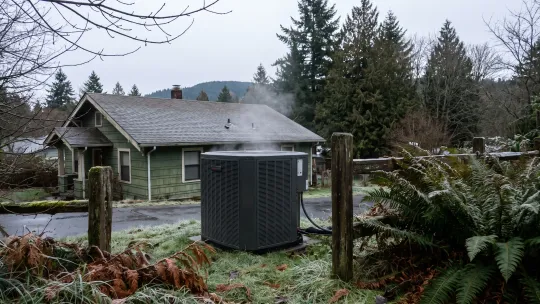
Washington's energy code puts Bellingham's outdoor heating design temperature at 19°F — colder than Sea-Tac's 24°F. We size from a load calculation against that number and spec equipment on its capacity at 5°F, because that is the figure that decides whether your auxiliary heat strips run all winter.
Bellingham sits in climate zone 4C (marine): heating-dominated, damp, rarely below 10°F. It is close to ideal heat pump territory, provided the system is not oversized.
Questions Bellingham homeowners actually ask
- Are there rebates for whole-house water treatment?
- No. Neither PSE nor Cascade Natural Gas rebates water treatment, there is no state programme for it, and the federal energy credits never covered filtration. This is an out-of-pocket purchase, and any pitch that implies a rebate is offsetting it is wrong.
- What is actually wrong with Whatcom County well water?
- Most commonly iron, manganese and hardness, which are nuisance problems that stain fixtures and destroy water heaters. In agricultural areas nitrate is the one that matters for health, and coliform bacteria shows up on wells with compromised seals or shallow completions. None of those is visible from the tap with any reliability, which is why the lab report comes first.
- Do I need filtration on City of Bellingham water?
- Generally not for safety. The City treats Lake Whatcom water to a published standard, chlorinates it and fluoridates it, so the honest reasons to filter city water are taste, chlorine, sediment and fluoride. If that is your reason, a carbon filter at the main or reverse osmosis at the drinking tap covers it far more cheaply than a well treatment train.
- Will a water softener remove iron?
- A softener will take small amounts of dissolved iron along with the hardness, and it will be overwhelmed and fouled by anything more. Iron at levels that stain needs oxidation and a backwashing filter ahead of the softener. Selling a softener as an iron solution is one of the more common ways people waste money on well treatment.
- Can filtration handle a coliform result?
- No. Coliform is a disinfection problem, typically addressed with ultraviolet treatment or chlorination after the well itself has been inspected, shock-treated and retested. Filters do not sterilise water. If your test comes back positive, deal with the well and the disinfection before you spend anything on nuisance filtration.
- How does hard water affect a heat pump water heater or a tankless unit?
- It shortens their lives. Scale plates onto the hottest surfaces, insulating the heat exchanger in a tankless unit and building sediment in a tank, and on hard well water it can take years off the equipment. If you are buying a new water heater and your water is hard, treating the water is part of protecting that purchase.
- Where does the equipment go?
- After the pressure tank and ahead of the water heater, with bypass valves and a drain within reach. In a Whatcom home with only a crawlspace and no utility room, the practical answer is often a well house, a garage corner or a pump house, and freeze protection then becomes part of the design. We look at that before quoting, not after.
- How often does it need service?
- Cartridge pre-filters are typically a few times a year, softener salt is ongoing, backwashing media is measured in years, and a UV lamp is an annual replacement regardless of whether it still glows. Every one of those intervals goes in the handover paperwork with part numbers, because unserviced treatment equipment quietly stops treating.
Get a quote for whole-home water filtration
Tell us what you have now. We will tell you what fits and what it costs.
Related work
Reverse Osmosis Drinking Water
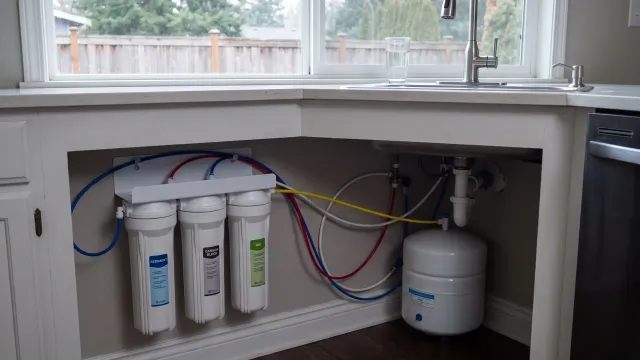
Drinking water that tastes like water, chosen on the basis of what is actually in your supply rather than what a catalogue says.
$300–$ 950 Details →
Heat Pump Water Heater Installation
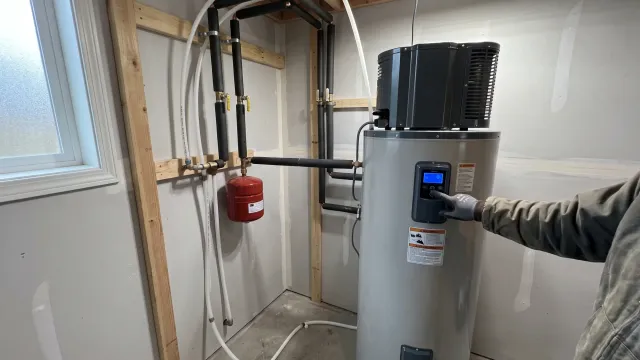
A heat pump water heater cuts the biggest electric load in the house after space heating, and PSE will pay $1,000 toward it if the model and the paperwork are right.
$2,800–$ 8,000 Details →
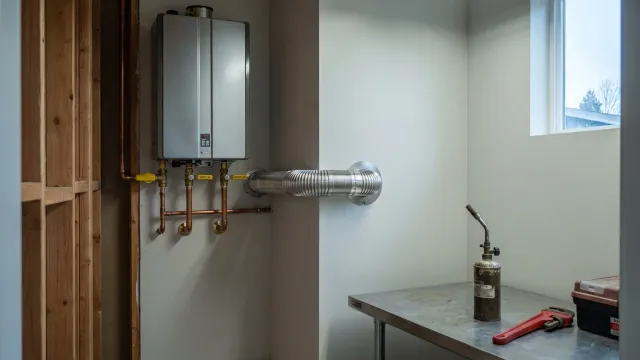
Tankless Water Heater Installation
Endless hot water and a reclaimed closet, once the fuel, the venting and the electrical panel actually support it.
$1,400–$ 5,600 Details →
Ready for a straight answer on your house?
Tell us what you have now and what you want it to do. We will tell you what fits, what it costs, and which rebates you actually qualify for — before anyone comes out.
Monday–Friday, 8:00 AM – 5:30 PM · Emergency calls answered 24/7