
Bellingham & Whatcom County
Indoor Air Quality, Ventilation and Wildfire Smoke Filtration
Ventilation and filtration matched to the two problems this climate actually creates: August smoke and winter moisture.
- WA L&I #BELLIHC808NM Active registration — verify it with the state
- $30,000 bonded Surety bond on file with L&I
- $1,000,000 insured General liability coverage
- Local since 2020 Owner-operated in Whatcom County
- We pull the permit City of Bellingham or Whatcom County, and we meet the inspector
What people call us about
Two things drive most air quality complaints in a Whatcom County home. From roughly July into September, wildfire smoke settles into the valley and the house you normally throw open becomes the house you have to seal. The rest of the year the problem is the opposite: a marine climate, a tighter envelope than the house was built with, and mould on the north-facing closet wall behind the furniture, and the two fixes are near opposites, which is why one gadget rarely solves either.
This is your job if
- Smoke season leaves you with a headache indoors and you have been running a box fan with a furnace filter taped to it.
- You had insulation and air sealing done, the house holds heat beautifully, and now the windows sweat and the bathroom never dries out.
- You installed ductless heads and discovered they recirculate room air rather than bringing in fresh air or filtering the house.
- Someone in the house has asthma and the symptoms track with the season, the room, or the dog.
- You are on a slab or over a damp Whatcom crawlspace and the musty smell comes back every autumn no matter what you clean.
Rebates that apply to this work
-
Low-Income Weatherization
Opportunity Council (Whatcom, Island, San Juan)
No cost to qualifying households
Income-qualified- Paperwork:
- You file it
- Deadline:
- Ongoing
- Verified:
- 2026-09-04 · source
Check what you qualify for
Four questions. No email required, and the answer is sometimes “nothing” — we would rather tell you that now than after a sales visit.
How the job actually goes
-
Work out which problem you have
Particulate, moisture, ventilation and contaminant problems all present as bad air and none of them share a solution. We ask when it happens, which rooms, whether it tracks with weather, whether the house was recently weatherized, and what the humidity reads. A house that is mouldy in November needs air changes and moisture control; a house that is unbearable in August needs filtration and a sealed envelope.
Your part: Buy a cheap hygrometer and log the humidity in the worst room for a week before we come out. That single data set changes the recommendation more than anything you can tell us from memory.
-
Filtration your system can actually carry
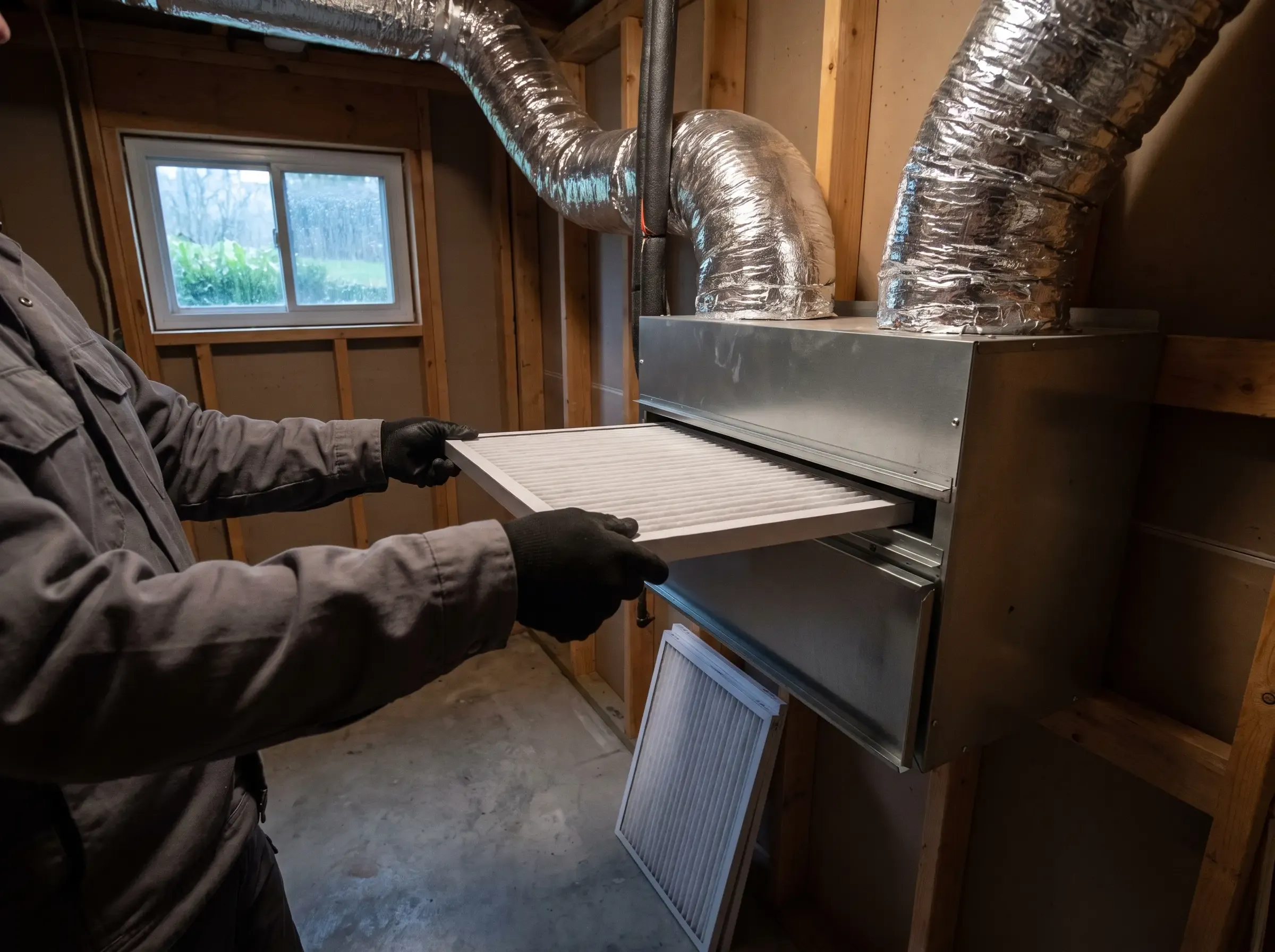
A higher MERV rating is not free: a thick MERV 13 filter in a return designed for a one-inch throwaway raises static pressure, cuts airflow and can push a furnace into its limit switch. The right answer is usually a properly sized media cabinet with adequate filter area, not a denser filter in the existing slot. Ductless heads carry coarse washable screens rather than MERV-rated filters, so they cannot filter a house, and no brochure will tell you that plainly.
-
Mechanical ventilation for a tight house
An energy or heat recovery ventilator brings measured outdoor air in and exhausts stale air while recovering most of the heat that would otherwise leave with it. In a marine climate like ours the ERV variant also moderates the moisture coming across, which matters in a house that is already fighting condensation. Sizing is by air changes for the actual volume, with balanced intake and exhaust and a terminations plan that keeps intake away from the driveway and the dryer vent.
-
Wildfire smoke readiness
Smoke season now needs planning rather than improvisation. That means a filter cabinet that can take a high-efficiency filter without starving the system, a way to shut mechanical ventilation intake when the outdoor air is worse than the indoor air, sealing the obvious infiltration paths, and portable HEPA units sized for the rooms people sleep in. A ductless-only house has no central filtration at all, so portables carry the load and should be bought before the smoke arrives.
Your part: Stock the filters in June. Every hardware store in the county is out of them the week the smoke arrives.
-
Moisture and mould, addressed at the source
Mould is a water problem wearing a biology costume. We look for the source first: bath and kitchen fans that do not move air or that dump into an attic, a crawlspace without a ground vapour barrier, gutters shedding against a foundation, or a dryer vented indoors. Fixing the source and getting real ventilation in place is what stops it coming back, and cleaning without that is a seasonal chore.
-
Point you at the no-cost programme if you qualify
Opportunity Council runs Weatherization Plus Health for Whatcom, Island and San Juan counties, which addresses mould and moisture reduction, pest mitigation and asthma triggers at no cost to qualifying households, including renters with landlord permission. We do not administer it and we get nothing from it. If your household qualifies, that is a better first call than a quote from us.
Your part: Contact Opportunity Council directly to check income eligibility before you spend money with anyone.
Permits
A filter cabinet swap needs no permit. Adding an ERV or HRV is ducted mechanical work with exterior penetrations and needs a mechanical permit: City of Bellingham Building Services through eTRAKiT inside city limits, Whatcom County Planning and Development Services for unincorporated addresses. We pull the mechanical permit and meet the inspector, with any electrical performed by a licensed electrical contractor.
Sized for 19°F, not for a rule of thumb
Washington's energy code puts Bellingham's outdoor heating design temperature at 19°F — colder than Sea-Tac's 24°F. We size from a load calculation against that number and spec equipment on its capacity at 5°F, because that is the figure that decides whether your auxiliary heat strips run all winter.
Bellingham sits in climate zone 4C (marine): heating-dominated, damp, rarely below 10°F. It is close to ideal heat pump territory, provided the system is not oversized.
Questions Bellingham homeowners actually ask
- Will my ductless mini split filter wildfire smoke?
- No, and this is the most common misunderstanding we correct. A ductless head recirculates the air already in the room through a coarse washable screen, which is there to protect the coil rather than to clean your air. It is not a MERV-rated filter and it brings in no outdoor air. In a ductless house, smoke filtration comes from portable HEPA units in the rooms you occupy.
- What MERV rating should I use in my furnace?
- The highest your system can move air through without raising static pressure past what the blower is rated for, which for a one-inch filter slot is usually well short of MERV 13. If you want high-efficiency filtration, the correct move is a deeper media cabinet with several times the filter area, not a denser filter in the same slot. A restricted filter can trip a furnace limit switch and ice a heat pump coil.
- ERV or HRV for a Bellingham house?
- An ERV is usually the better fit here, because it transfers some moisture as well as heat and our problem is generally too much humidity rather than too little. An HRV recovers heat only and suits drier, colder climates. Either one is a real improvement over relying on bathroom fans and leaky windows, which is what most houses in this county are still doing.
- My house sweats since we insulated it. What happened?
- You reduced the accidental ventilation that was drying the house out, without replacing it with deliberate ventilation. Weatherization is worth doing and this is its known side effect. The fix is mechanical: adequate bath and kitchen exhaust that actually vents outdoors, and in a tight house a balanced ERV rather than hoping a window handles it.
- Does duct cleaning fix indoor air quality?
- Rarely on its own. If ducts are visibly contaminated, took construction debris, or have a moisture problem, cleaning is justified, and Opportunity Council explicitly excludes duct cleaning from its weatherization work for the same reason. For most complaints the money does more good on filtration, ventilation and finding the moisture source.
- Can you do anything about the musty crawlspace smell?
- Often yes, because that smell usually arrives with air being drawn up out of the crawlspace and into the house. A ground vapour barrier, correcting drainage and bulk water, sealing the duct and penetration leaks that make the crawlspace part of your air supply, and then real ventilation is the sequence. Deodorising the air is treating the symptom.
- Is there help paying for mould and moisture work?
- For income-qualifying Whatcom County households, yes: Opportunity Council’s Weatherization Plus Health programme covers mould and moisture reduction, pest mitigation and asthma-trigger reduction at no cost, and renters can qualify with landlord permission. Apply directly with them. We would rather tell you about a free programme than sell you equipment you can get help with.
- Do UV lamps or ionisers help?
- We do not lead with them, because the evidence for household air cleaners of that type is much weaker than for filtration and ventilation, and some ion-generating devices produce ozone. Get the air changes right, get the filtration right, fix the moisture, and then decide whether anything else is worth buying. That order is the honest one.
Get a quote for indoor air quality and ventilation
Tell us what you have now. We will tell you what fits and what it costs.
Related work
Heat Pump Maintenance
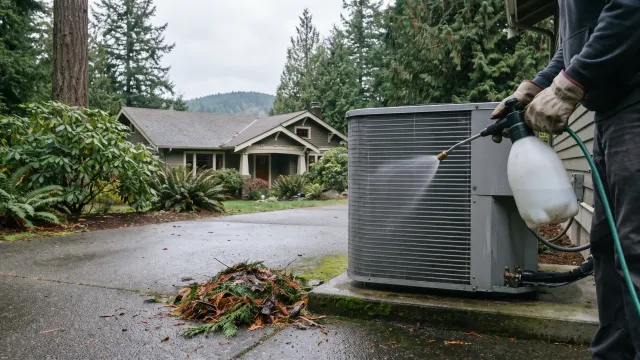
An hour of attention each year keeps the capacity you paid for and finds the cheap failures before they become the expensive ones.
Details →
Furnace Repair
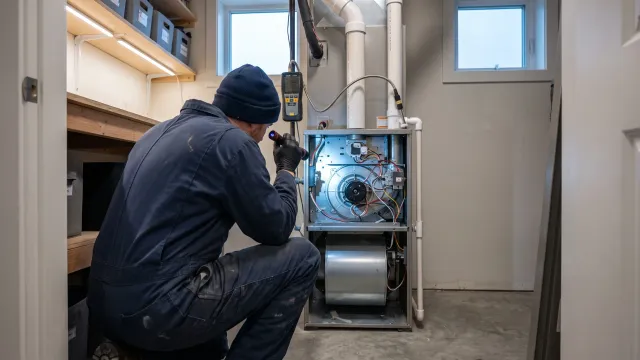
A furnace diagnosis that includes the combustion safety check, priced as a flat rate so the clock is not part of your bill.
Details →
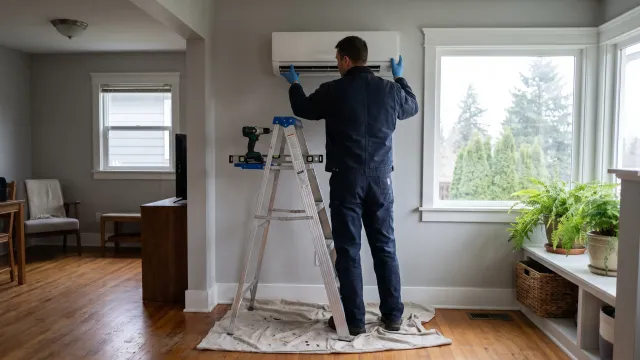
Ductless Mini Split Installation
Heat and cool the rooms you actually use, without tearing your house apart to add ductwork.
$3,000–$ 10,000 Details →
Ready for a straight answer on your house?
Tell us what you have now and what you want it to do. We will tell you what fits, what it costs, and which rebates you actually qualify for — before anyone comes out.
Monday–Friday, 8:00 AM – 5:30 PM · Emergency calls answered 24/7