
Answers
Can a heat pump cool my house in summer?
A heat pump is an air conditioner that also runs backward. What Bellingham’s 78°F cooling design temperature means for capacity, plus wildfire smoke and dehumidification.
The short answer
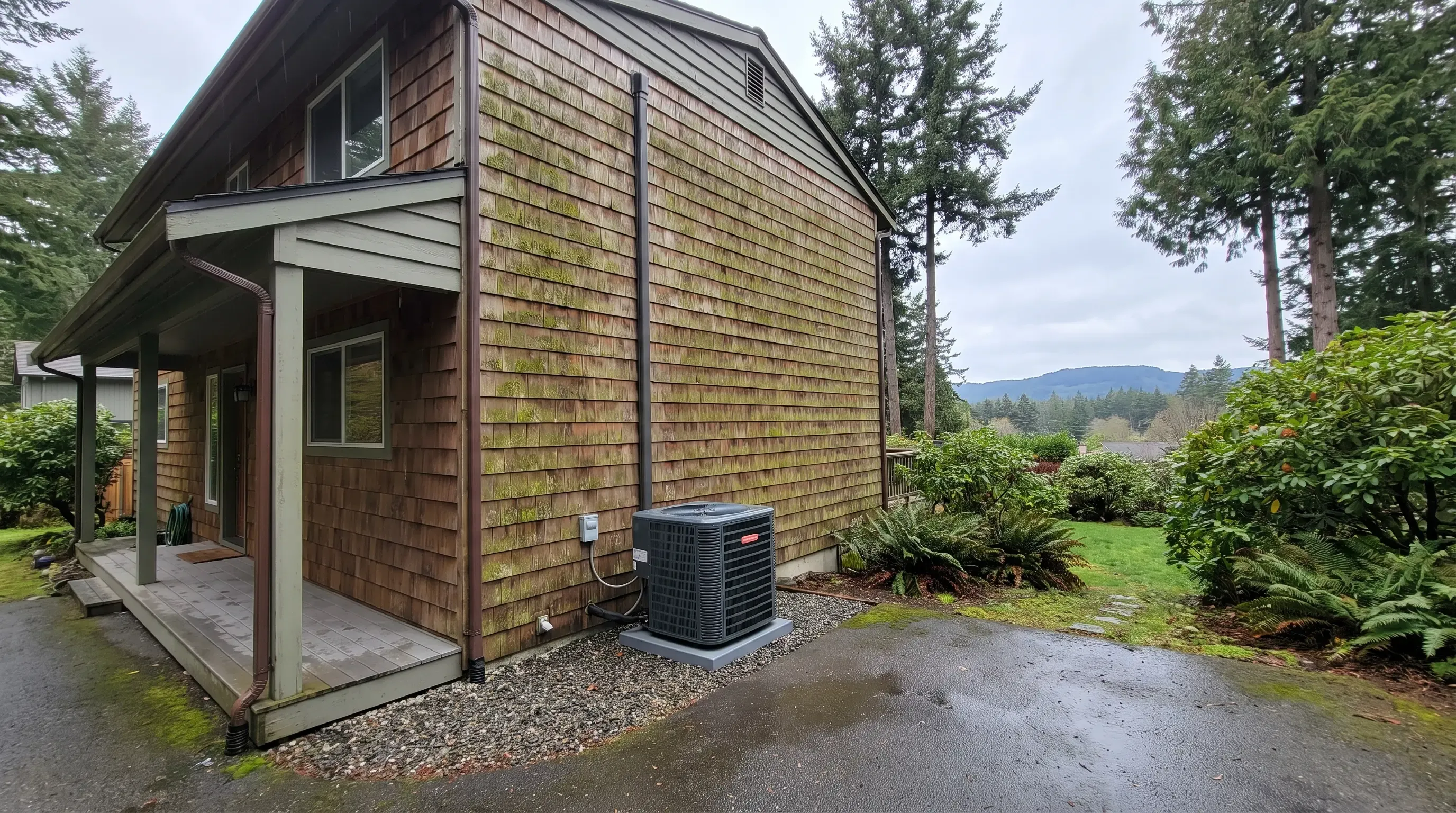
Yes. A heat pump is an air conditioner with a reversing valve, so cooling is not an add-on, it is the same hardware running the other direction. Bellingham’s cooling design temperature is 78°F, which is mild, so the equipment we size for a 19°F heating load has ample cooling capacity for a normal summer here.
Heating drives the sizing, cooling comes along
Because zone 4C is heating-dominated, the heating load sets the equipment size and the cooling capacity is usually more than the 78°F design condition demands. That is a happy accident for homeowners here: the system you need for January gives you July for free. In a house with a lot of west-facing glass, we still check the cooling load rather than assume it.
Why so many Bellingham houses have no cooling at all
Older housing stock in this town was built for a climate where nobody expected to need air conditioning, so there is no ductwork and no condenser pad. Ductless is popular here specifically because it delivers cooling without adding ducts to a 1920s house with plaster walls and no soffit space. One head in the main living space plus one in the primary bedroom is the usual minimum viable cooling plan.
Smoke season is a separate problem
The last several summers have brought wildfire smoke into Whatcom County. A mini split in cooling mode recirculates indoor air through its own filter, which is not the same as filtering the whole house. If smoke is your real concern, the answer involves filtration and controlled ventilation, not just cooling capacity. A closed house with a running heat pump and a good filter is better than open windows, but it is not an air cleaner.
Dehumidification and the condensate you now have to think about
In cooling mode the indoor coil condenses water, and that water has to go somewhere. Wall-mounted heads drain by gravity through the lineset penetration, and a poorly pitched drain line is the single most common cause of water appearing on a living room wall. If your head is below the exterior drain point, the install needs a condensate pump, and that pump needs to be accessible for service.
Read next
The pages that carry the detail behind this answer.
Get this answered for your house
Tell us what you have now and what you want it to do. We will tell you what fits, what it costs, and which rebates actually apply.
Ready for a straight answer on your house?
Tell us what you have now and what you want it to do. We will tell you what fits, what it costs, and which rebates you actually qualify for — before anyone comes out.
Monday–Friday, 8:00 AM – 5:30 PM · Emergency calls answered 24/7