
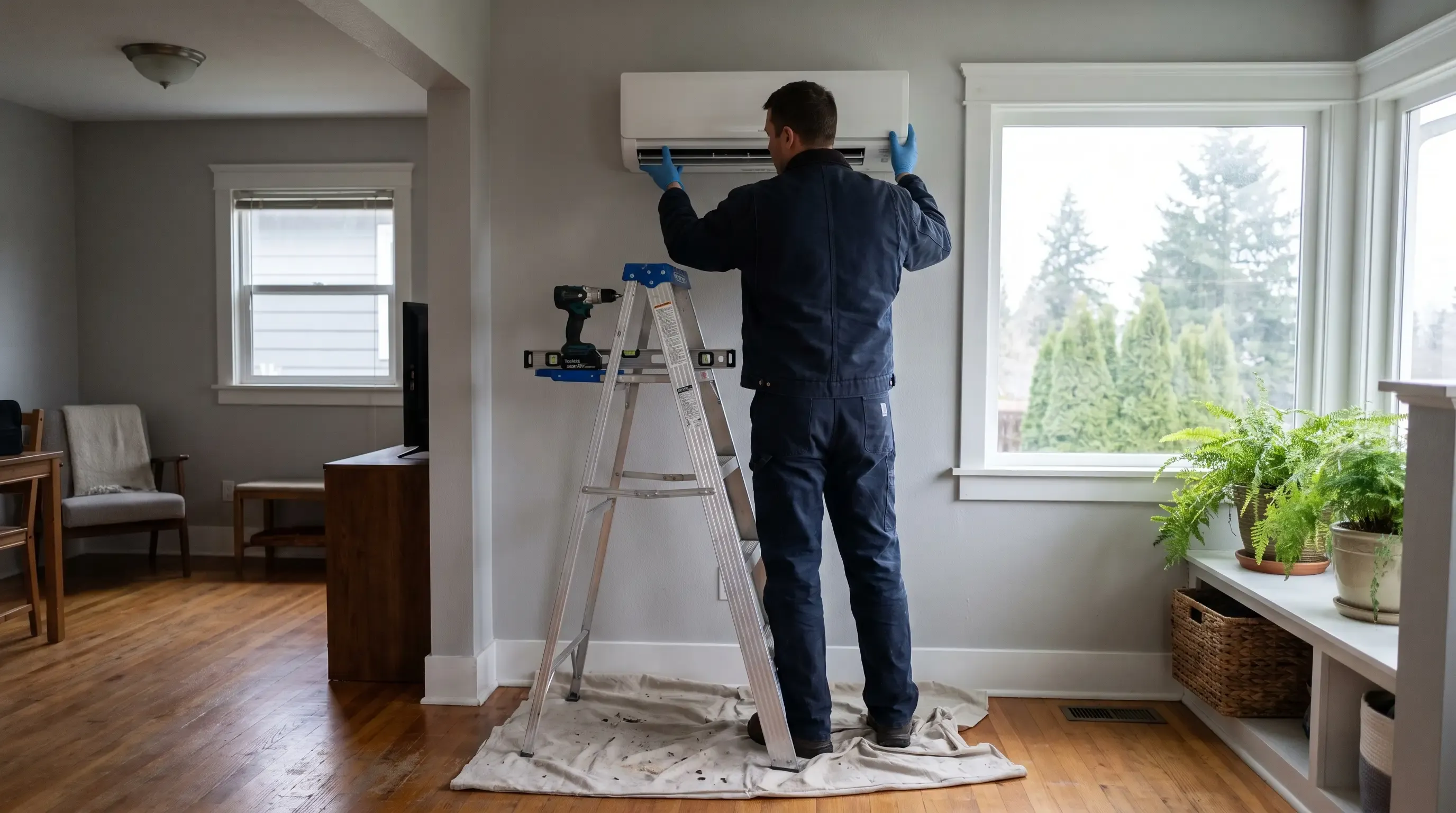
mini split troubleshooting
Mini split is dripping water inside the house
What it probably is, what you can safely check yourself, and the point where it becomes our job.
It is still running, so you have a few days. It is not going to fix itself, and the part that failed rarely fails alone.
What is most likely going on
Water dripping from an indoor head is condensate that cannot get out, not a refrigerant leak. Turn the unit off at the remote to stop making more water, catch what is falling, and get it looked at before it soaks the wall behind the head.
Likely causes, most common first
- 1
Blocked condensate drain line
The drain runs inside the same insulated bundle as the refrigerant lines and exits through the wall. Algae, dust, insects and mud dauber nests at the outdoor end all block it, and once the pan overflows the water goes into the room. This is the most common cause by a wide margin.
- 2
Drain line pitched flat or uphill
Gravity drainage needs continuous fall from the pan to the exterior, and the wall penetration should be cored with a slight downward slope to the outside. An install that came back level, or a line sagging in a long horizontal run, holds water until it backs up. This is an installation defect and it will keep happening until the routing is corrected.
- 3
Failed condensate pump
Heads mounted below the exterior drain point, which is typical in a daylight basement, rely on a small pump. When the pump fails or its float sticks, the pan overflows within a cycle or two. The pump also needs to be somewhere a technician can actually reach it.
- 4
Frozen indoor coil in cooling mode
A dirty filter, a very low fan setting, or low refrigerant charge can ice the indoor coil in cooling. When the system shuts off, the ice melts faster than the pan can drain and water sheets down the wall. If you find frost inside the head, the leak is a symptom of something else.
- 5
Loose or missing pan and drain fittings
The drain hose connection at the pan can vibrate loose, and a poorly sealed wall penetration lets wind-driven rain track back inside along the lineset. On an exposed shoreline lot, driving rain finding an unsealed penetration is a real cause and not a rare one.
What you can safely check yourself
Work down the list before you book anything. Plenty of calls end here, and we would rather you keep the money.
- Turn the indoor unit off at the remote so it stops producing condensate, and put a towel or pan under the drip.
- Go outside and find the drain line end; check whether it is dripping during a cooling cycle or blocked by dirt, an insect nest or mulch.
- Remove and rinse the washable filter screens in the head, then dry them before reinstalling.
- Look inside the head with a flashlight for frost or ice on the coil fins.
- Check the exterior wall penetration and the line-hide cover for a gap where wind-driven rain could enter.
What is deliberately not on that list
Nothing above involves refrigerant, gas piping, or opening a live electrical panel. Refrigerant work is federally regulated and needs recovery equipment. Gas work done wrong kills people. An energised panel turns a $300 repair into a hospital visit. Electrical work on the circuit itself is done by a licensed electrical contractor. If a step you have read elsewhere involves any of those three, stop and call instead.
When to call us
Call us if water returns after clearing the outdoor drain end, if you find ice on the indoor coil, or if you have a condensate pump that is not running. Water inside a wall cavity does expensive damage quietly, so this is a same-week call rather than a wait-and-see. Reach us at (360) 592-3824.
Monday–Friday, 8:00 AM – 5:30 PM · Emergency calls answered 24/7
Tell us what it is doing
Describe the symptom and we will tell you what it takes to fix, what it is likely to cost, and whether it is worth fixing at all.
Monday–Friday, 8:00 AM – 5:30 PM · Emergency calls answered 24/7