
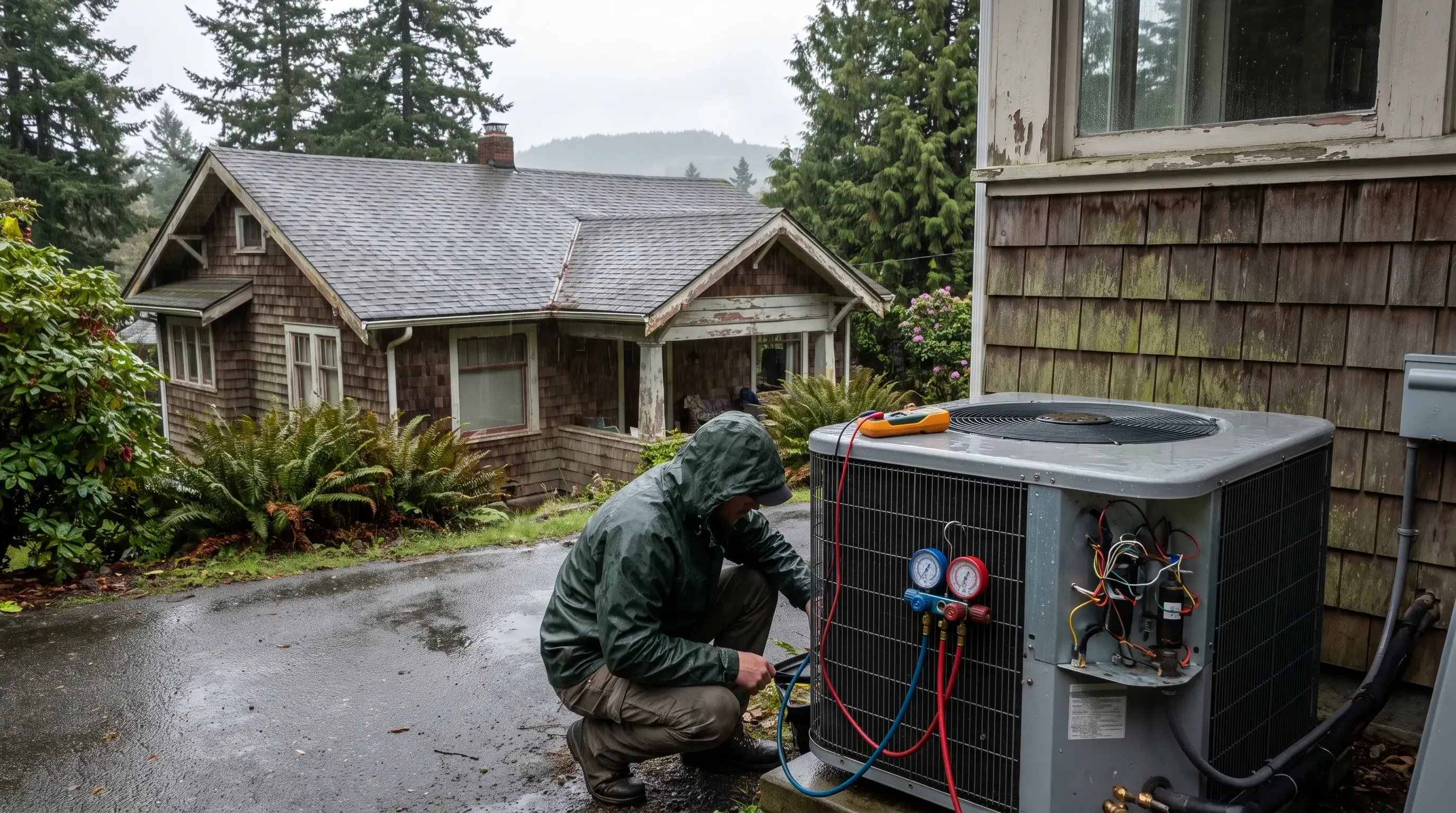
heat pump troubleshooting
Heat pump outdoor unit is frozen or iced up
What it probably is, what you can safely check yourself, and the point where it becomes our job.
It is still running, so you have a few days. It is not going to fix itself, and the part that failed rarely fails alone.
What is most likely going on
Light frost on the outdoor coil is normal here and clears itself on a defrost cycle. A solid ice block encasing the coil or fan, or frost that never clears across a whole day, means the defrost control, the sensor, or the drainage under the unit is failing.
Likely causes, most common first
- 1
Normal frosting in near-saturated air
At outdoor temperatures around freezing in the high humidity typical of this county, the coil runs below dew point and collects frost every cycle. The system is designed for exactly this and reverses periodically to shed it. Frost that appears and disappears through the day is the system working.
- 2
Defrost board or defrost sensor failure
The defrost cycle is triggered by a control watching coil temperature and time. If the sensor has drifted or the board has failed, the unit keeps running in heating mode while ice accumulates, and capacity falls until it stops heating altogether. This one gets worse quickly, so it is worth catching early in the season.
- 3
Meltwater pooling and refreezing in the base pan
Every defrost cycle produces water that must drain away. A unit set flat on grade, or one placed under a roof drip line, sits in its own meltwater until the whole base freezes solid and locks the fan. This is the most common cause we see on units that were installed at ground level without a riser stand.
- 4
Restricted airflow across the outdoor coil
Cottonwood fluff, maple and cedar litter, moss and blackberry all block the coil, which drops coil temperature and accelerates frosting. Snow drifted against the unit does the same. Clearing debris is genuinely preventive rather than cosmetic.
- 5
Low charge or a failing outdoor fan motor
A low refrigerant charge drops evaporating temperature and makes the coil frost faster than defrost can clear it, and an outdoor fan that is not turning has the same effect. Both need instrumentation to confirm, and refrigerant work falls under EPA Section 608 rules.
What you can safely check yourself
Work down the list before you book anything. Plenty of calls end here, and we would rather you keep the money.
- Clear leaves, needles, moss and snow away from the outdoor coil and give the unit clear space on all sides.
- Check whether the unit is sitting in standing water or under a roof drip line, and note it for us if it is.
- Watch for one full hour to see whether a defrost cycle runs and clears the frost.
- Never chip ice off the coil with anything hard, and never pour hot water on the unit; if you must clear it, shut the system off at the thermostat and let it thaw.
- Check the indoor filter, since restricted indoor airflow also pushes the outdoor coil colder.
What is deliberately not on that list
Nothing above involves refrigerant, gas piping, or opening a live electrical panel. Refrigerant work is federally regulated and needs recovery equipment. Gas work done wrong kills people. An energised panel turns a $300 repair into a hospital visit. Electrical work on the circuit itself is done by a licensed electrical contractor. If a step you have read elsewhere involves any of those three, stop and call instead.
When to call us
Call us if ice is encasing the fan blade or the coil, if frost has not cleared in a full day, or if you have found the unit sitting in its own meltwater. Running a solid-iced unit risks the fan motor and the compressor, so shut it off at the thermostat and switch to backup heat if you have it. Reach us at (360) 592-3824.
Monday–Friday, 8:00 AM – 5:30 PM · Emergency calls answered 24/7
Tell us what it is doing
Describe the symptom and we will tell you what it takes to fix, what it is likely to cost, and whether it is worth fixing at all.
Monday–Friday, 8:00 AM – 5:30 PM · Emergency calls answered 24/7