
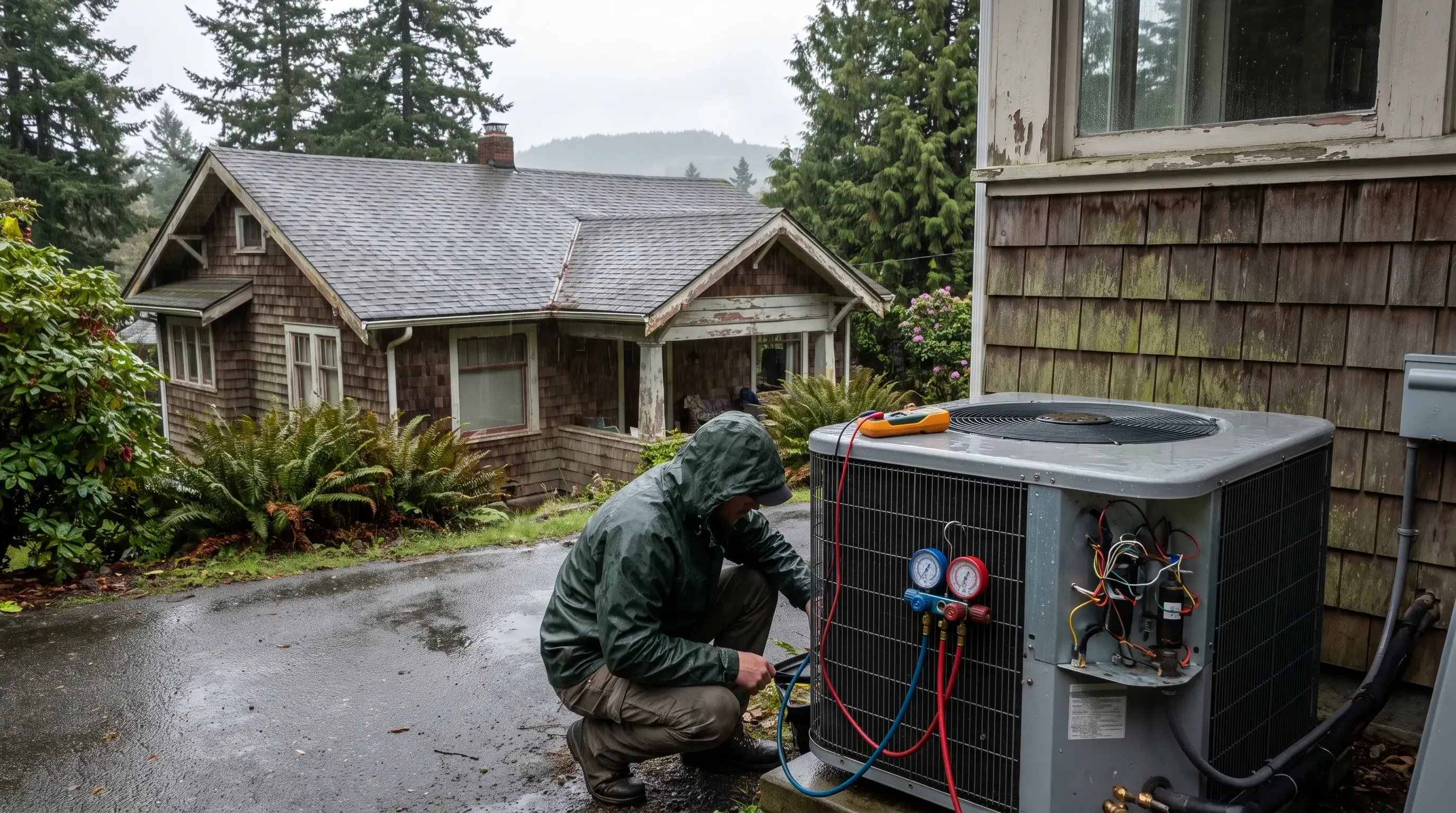
heat pump troubleshooting
Heat pump runs constantly and never shuts off
What it probably is, what you can safely check yourself, and the point where it becomes our job.
It is still running, so you have a few days. It is not going to fix itself, and the part that failed rarely fails alone.
What is most likely going on
Long, steady, low-speed running is normal and desirable on an inverter system, and it is the most efficient way for it to operate. The problem is running constantly while never reaching the setpoint, which points at capacity, airflow, charge, or a house losing more heat than the system can replace.
Likely causes, most common first
- 1
Normal inverter behavior in cold weather
Variable-capacity equipment is designed to find a speed that matches the load and hold it, rather than blasting and stopping. On a 25°F Bellingham morning a well-set-up system may run for hours, and that is exactly what you paid for. If the house is holding temperature, nothing is wrong.
- 2
The system is below its balance point
Below the outdoor temperature where equipment output equals house heat loss, the heat pump runs flat out and still falls short, which is why backup heat exists. On the few nights that approach our 19°F design temperature, this is expected. If it happens at 40°F, the sizing or the equipment condition is wrong.
- 3
Restricted airflow or a dirty coil
A clogged filter, a fouled indoor coil, or an outdoor coil packed with cottonwood fluff and moss all cut capacity, so the system runs longer for less heat. This is the failure mode that creeps up over two or three seasons and gets blamed on the equipment being old.
- 4
Low refrigerant charge
A slow leak reduces capacity without stopping the system, so it simply runs longer and longer as the season goes on. Supply air feels lukewarm rather than warm. Finding and repairing the leak, rather than topping it off, is the actual repair, and refrigerant work is federally regulated.
- 5
Envelope losses the system was never sized for
An uninsulated attic, a leaky crawlspace hatch, or single-pane windows can put real load on a correctly sized system. PSE pays weatherization as an instant rebate, and tightening the house is usually cheaper than adding tonnage.
What you can safely check yourself
Work down the list before you book anything. Plenty of calls end here, and we would rather you keep the money.
- Check whether the house is actually holding the setpoint; a long run that maintains temperature is normal.
- Replace the indoor filter and confirm return air grilles are not blocked by furniture or rugs.
- Clear leaves, needles and moss from the outdoor coil and give it clear airflow on all sides.
- Check whether the thermostat is in emergency or auxiliary heat, which will run resistance heat continuously.
- Note the outdoor temperature when the problem appears, since a 40°F failure and a 20°F failure mean different things.
What is deliberately not on that list
Nothing above involves refrigerant, gas piping, or opening a live electrical panel. Refrigerant work is federally regulated and needs recovery equipment. Gas work done wrong kills people. An energised panel turns a $300 repair into a hospital visit. Electrical work on the circuit itself is done by a licensed electrical contractor. If a step you have read elsewhere involves any of those three, stop and call instead.
When to call us
Call us if the system runs continuously and still loses ground in mild weather, or if supply air has been getting weaker season over season. Bring the outdoor temperature and the indoor temperature you are actually achieving. Regular hours are Monday–Friday 8:00 AM–5:30 PM at (360) 592-3824.
Monday–Friday, 8:00 AM – 5:30 PM · Emergency calls answered 24/7
Tell us what it is doing
Describe the symptom and we will tell you what it takes to fix, what it is likely to cost, and whether it is worth fixing at all.
Monday–Friday, 8:00 AM – 5:30 PM · Emergency calls answered 24/7