
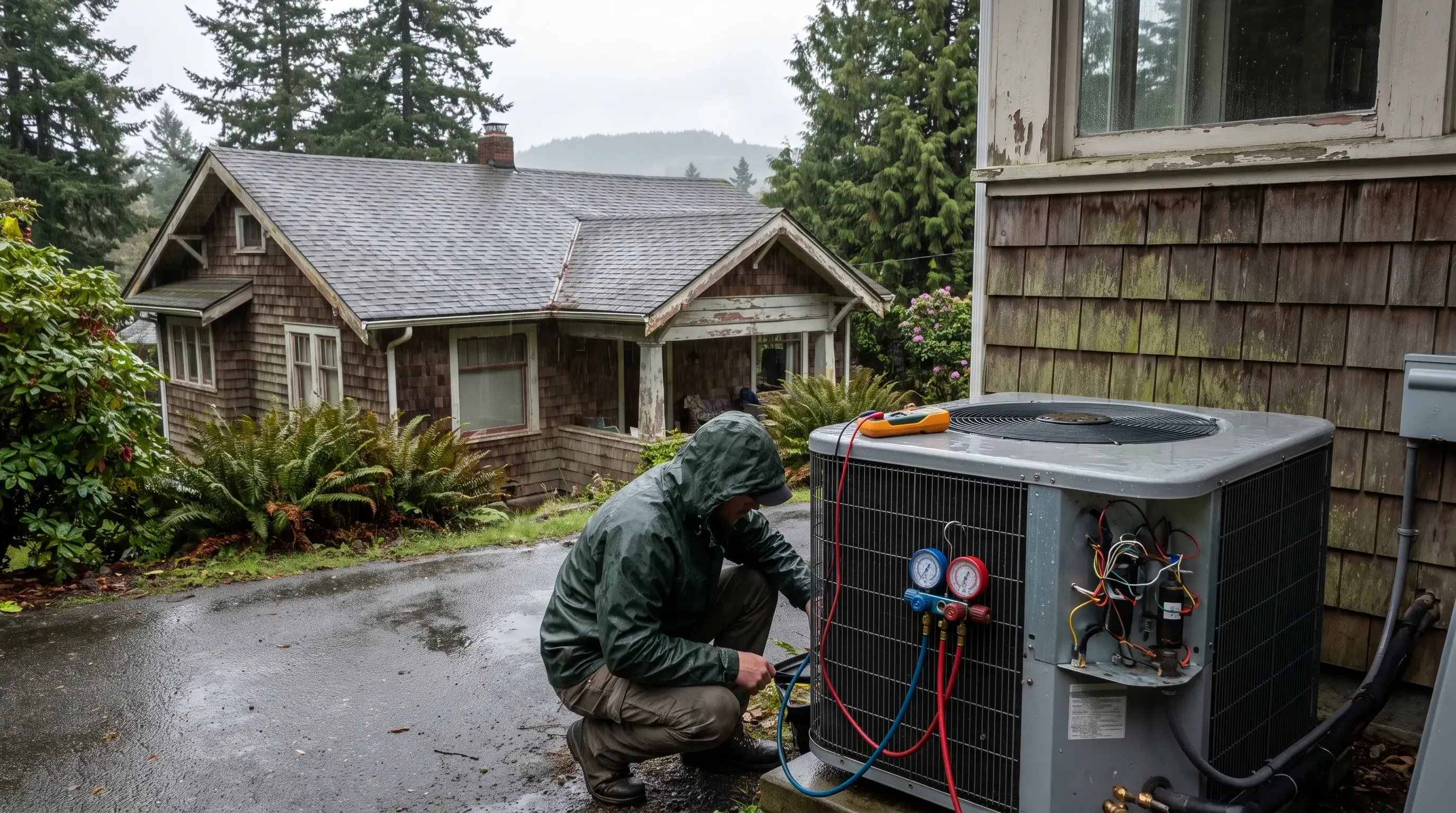
heat pump troubleshooting
Heat pump or mini split smells bad
What it probably is, what you can safely check yourself, and the point where it becomes our job.
It is still running, so you have a few days. It is not going to fix itself, and the part that failed rarely fails alone.
What is most likely going on
A musty or sour smell is almost always biological growth on a damp indoor coil and blower wheel, which is common in our marine climate and is cleanable. A burning or electrical smell is a shut-it-off-now situation, and a rotten-egg smell near any gas appliance means leave the building first.
Likely causes, most common first
- 1
Biofilm on the indoor coil, blower wheel and drain pan
A mini split head condenses water every cooling cycle and the resulting damp, dark plenum grows mold and bacteria, which is why the smell hits hardest in the first minute of a cycle. This is the single most common indoor air complaint we get on ductless systems in Bellingham. It needs a real deep clean of the wheel and coil, not an aerosol.
- 2
Blocked or stagnant condensate drain
A drain line with a low spot, algae growth, or a slug of debris holds standing water that smells like a pond. On a gravity-drained wall head that also risks water finding the wall instead of the drain. Clearing and re-pitching the line addresses both problems at once.
- 3
Dust burning off resistance heat at the start of the season
The first few runs of electric backup heat or a resistance element in the fall smell hot and dusty as accumulated summer dust burns off. It should fade within a cycle or two. If a hot smell persists beyond that, treat it as electrical rather than as dust.
- 4
Electrical overheating
A sharp, acrid, fish-or-plastic smell means insulation, a motor winding, or a terminal connection is overheating. Shut the system off at the breaker and call. This is not something to keep running while you decide, because the failure mode after the smell is worse than the smell.
- 5
A dead animal or nest in a duct, crawlspace or the outdoor unit
Rodents get into crawlspace ductwork and into outdoor units, which are warm and sheltered, and older Bellingham houses with open crawl vents are especially prone to it. The smell is unmistakable and it is a cleanup and exclusion problem rather than an equipment failure.
What you can safely check yourself
Work down the list before you book anything. Plenty of calls end here, and we would rather you keep the money.
- Replace the indoor filter and, on a mini split head, rinse and dry the washable filter screens.
- Look into the indoor head or the return with a flashlight for visible black or grey growth on the coil fins and blower wheel.
- Check whether the condensate line outdoors is dripping during a cooling cycle, since a dry line during cooling suggests a blockage.
- If you smell burning or hot plastic, shut the system off at the breaker and stop investigating.
- If you smell rotten eggs or sulfur anywhere near gas equipment, leave the building and call your gas utility from outside.
What is deliberately not on that list
Nothing above involves refrigerant, gas piping, or opening a live electrical panel. Refrigerant work is federally regulated and needs recovery equipment. Gas work done wrong kills people. An energised panel turns a $300 repair into a hospital visit. Electrical work on the circuit itself is done by a licensed electrical contractor. If a step you have read elsewhere involves any of those three, stop and call instead.
When to call us
Call us for a musty smell that survives a filter change, since coil and blower-wheel cleaning is a real service task and not a spray. Call immediately for any burning or electrical smell, with the system already off at the breaker. We answer at (360) 592-3824, with emergency calls answered 24/7.
Monday–Friday, 8:00 AM – 5:30 PM · Emergency calls answered 24/7
Tell us what it is doing
Describe the symptom and we will tell you what it takes to fix, what it is likely to cost, and whether it is worth fixing at all.
Monday–Friday, 8:00 AM – 5:30 PM · Emergency calls answered 24/7