
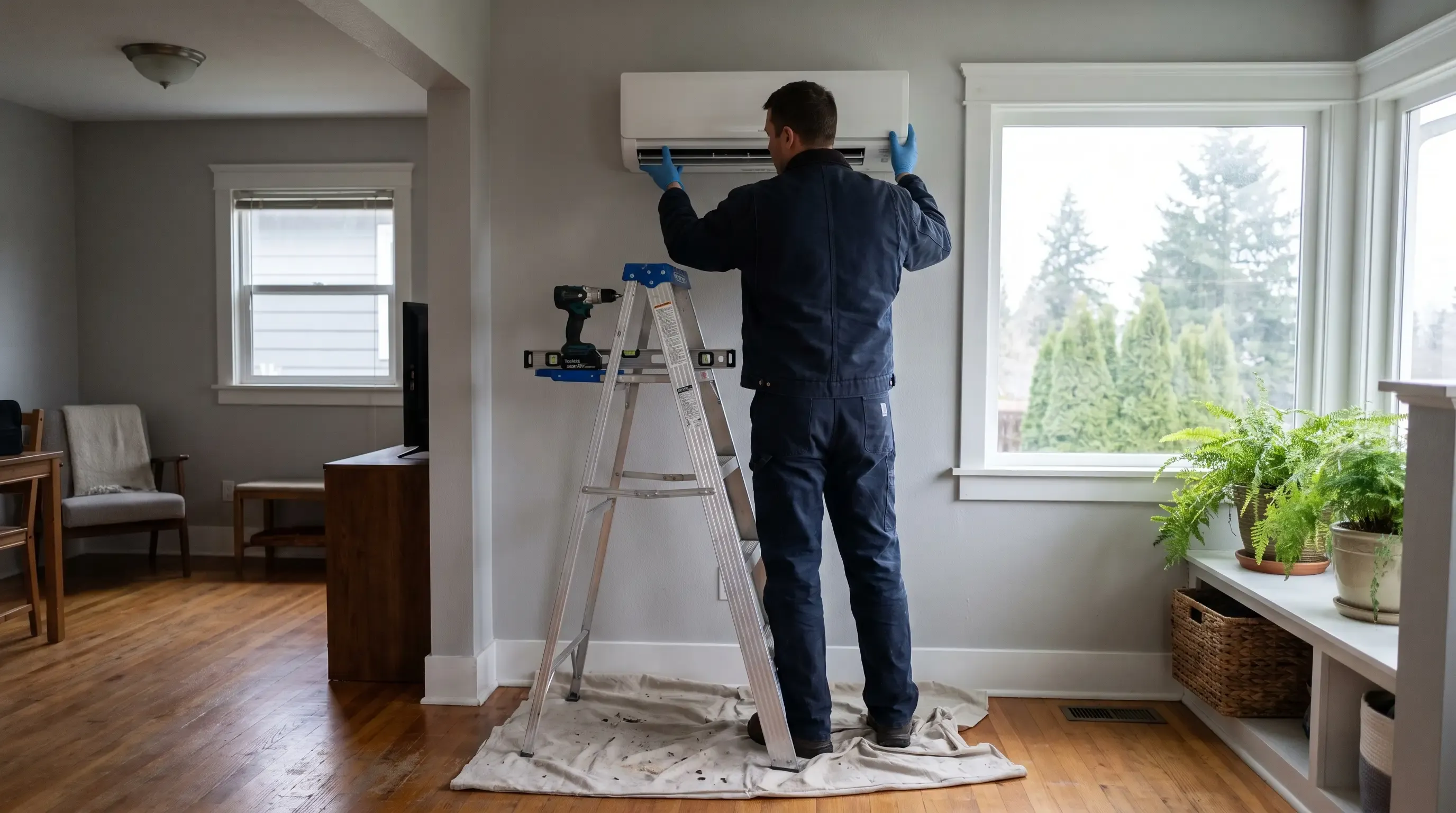
mini split troubleshooting
Mini split has weak airflow
What it probably is, what you can safely check yourself, and the point where it becomes our job.
It is still running, so you have a few days. It is not going to fix itself, and the part that failed rarely fails alone.
What is most likely going on
Nine times out of ten it is dirt: a loaded filter screen or a blower wheel caked with the fine grime that builds up on a damp coil. Check the filters first, then look at whether the unit is simply running in a low-output mode.
Likely causes, most common first
- 1
Loaded washable filter screens
Ductless heads use fine mesh screens that clog faster than a furnace filter, and pet hair or a dusty remodel fills them in weeks rather than months. Because they are washable, people forget they exist entirely. Rinsing them is the highest-value five minutes of maintenance available on a mini split.
- 2
Blower wheel fouled with biofilm and dust
The squirrel-cage wheel in a ductless head runs in a damp environment and accumulates a hard grey film in each blade pocket, which destroys airflow and often smells. Cleaning it properly means pulling the wheel or bagging and washing the unit, which is a real service procedure rather than a wipe-down. It is also the fix that makes the biggest difference.
- 3
Fan is set to auto, quiet, or a low speed
Auto and quiet modes deliberately reduce fan speed, and an inverter system holding a low output on a mild day genuinely moves less air. If the room is holding temperature, low airflow may be correct operation. Try a manual high fan setting to see whether the machine is capable of more.
- 4
Iced indoor coil
A coil that has frozen in cooling mode blocks its own airflow, and the cause behind it is usually restricted airflow to begin with or a low refrigerant charge. If you see frost on the fins inside the head, stop running it in cooling and let it thaw before anyone tries to diagnose it.
- 5
Louver or vane mechanism failure
The motorised vanes that direct discharge air can stick, break a linkage, or park in a nearly closed position, which reads as weak airflow even though the blower is fine. It is a visible failure once you look at the head with it running, and the parts are model-specific.
What you can safely check yourself
Work down the list before you book anything. Plenty of calls end here, and we would rather you keep the money.
- Open the front panel, remove the washable filter screens, rinse them, dry them fully and reinstall.
- Look at the blower wheel and coil fins with a flashlight and note whether they are visibly grey or furry.
- Set the fan to high manually rather than auto or quiet and see whether output improves.
- Check the discharge vanes for a stuck or nearly closed position while the unit is running.
- Confirm nothing is blocking the return at the top of the head, including a shelf or curtain above it.
What is deliberately not on that list
Nothing above involves refrigerant, gas piping, or opening a live electrical panel. Refrigerant work is federally regulated and needs recovery equipment. Gas work done wrong kills people. An energised panel turns a $300 repair into a hospital visit. Electrical work on the circuit itself is done by a licensed electrical contractor. If a step you have read elsewhere involves any of those three, stop and call instead.
When to call us
Call us if the blower wheel or coil looks grey and furry, if airflow is still weak on high fan after cleaning the screens, or if you found frost on the indoor coil. A proper blower-wheel and coil cleaning restores output that people assume is lost to age. Reach us at (360) 592-3824.
Monday–Friday, 8:00 AM – 5:30 PM · Emergency calls answered 24/7
Tell us what it is doing
Describe the symptom and we will tell you what it takes to fix, what it is likely to cost, and whether it is worth fixing at all.
Monday–Friday, 8:00 AM – 5:30 PM · Emergency calls answered 24/7